 29th Nov
Dr. Anurag Chatterjee — MBBS (HONS) | MS General Surgery | MCh Urology & Renal Transplant
Kidney stones are common, painful, and in most cases treatable with modern minimally invasive techniques. This article explains typical causes, key symptoms to watch for, diagnostic steps, and contemporary laser-based procedures — URSL, RIRS and PCNL — used to manage and remove stones safely and effectively.
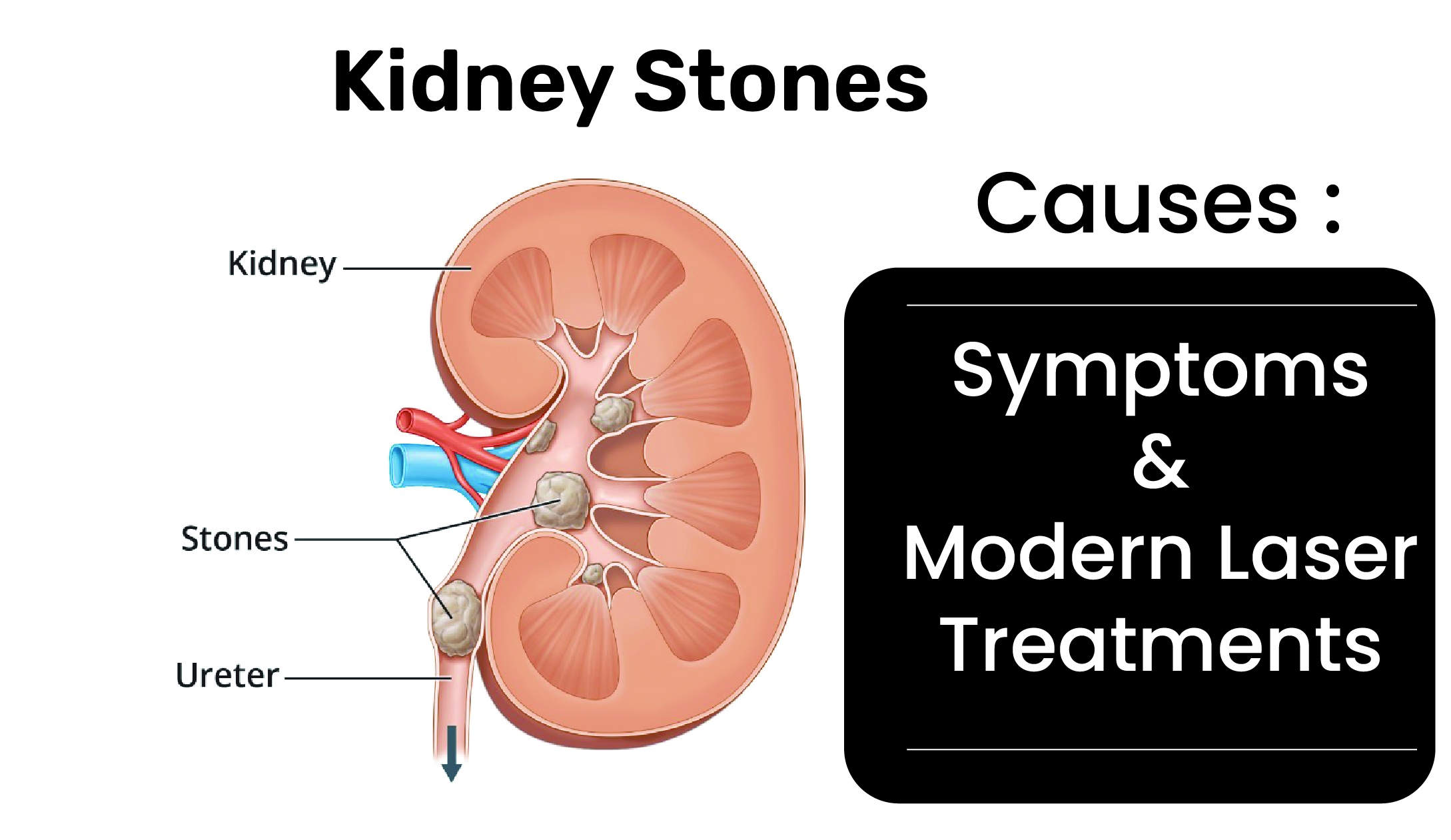
Kidney stones are hard deposits of minerals and salts that form inside the kidneys. They range in size from tiny grains to larger stones that can obstruct urine flow, cause severe pain, provoke infection, and potentially damage kidney function if untreated.
Symptoms vary depending on stone size and location. Seek medical attention if you experience:
Most stones today can be treated with minimally invasive laser techniques. The major options include:
What it is: A semi-rigid or flexible ureteroscope is passed through the urinary tract to the ureter or kidney. A Holmium:YAG laser breaks the stone into small fragments which are removed or passed naturally.
Best for: Small to moderate stones in the ureter or accessible kidney regions.
Advantages: No incision, short stay, fast recovery.
What it is: A flexible ureteroscope is advanced into the kidney. Laser energy is used to “dust” or fragment stones; small baskets may retrieve pieces.
Best for: Small-to-moderate kidney stones or calyceal stones.
Advantages: No external cuts, minimal trauma, excellent success rates.
What it is: For large or complex stones, a small incision is made in the back to create a tract into the kidney. A nephroscope and lithotripsy devices remove the stones.
Best for: Stones larger than 2 cm, staghorn stones, or stones unsuitable for URSL or RIRS.
Advantages: High clearance for large stones; modern mini-PCNL reduces incision size.
Kidney stones are highly treatable today—modern laser techniques allow patients to recover faster with minimal pain.
If you experience sudden severe flank pain, visible blood in urine, fever, or difficulty passing urine, consult a urologist immediately. Early diagnosis and minimally invasive treatments reduce complications and protect kidney function. As a specialist in endourology and renal transplant, Dr. Anurag Chatterjee provides advanced, personalized care for all types of kidney stones.
This article provides general information and does not replace personalized medical advice. For diagnosis, treatment and follow-up, consult a qualified urologist.
Quick and easy appointment booking for your medical consultation.
Providing advanced urology, renal transplant, and robotic surgical care with precision, compassion, and the most modern medical technologies.
© Copyright 2018-2026 Dr. Anurag Chatterjee | Developed by SASLAB | All Rights Reserved.


